A conversation with showrunner Marissa Jo Cerar.
Judging by her impactful, momentous shows and hyper-impressive roster of scripts she’s written throughout her career, it was an amazing honor to meet Marissa Jo Cerar, who is such a warm, soft-spoken, kind person (with great posture any writer would envy) in real life.
Marissa is a showrunner from Illinois, and she has written on a long list of some of my favorite shows — THE FOSTERS, 13 REASONS WHY, SHOTS FIRED, THE HANDMAID’S TALE — and she created WOMEN OF THE MOVEMENT and BLACK CAKE.
Right now, she’s working on another adaptation that she can’t yet talk about! Shh!
Marissa is one of eight adopted siblings, and we talked about how her upbringing and experiences led her to be the successful writer she is now. Not only that, but how her hard work, honesty, and drive to keep writing have propelled her forward. Keep reading for some serious insight into the mind of a showrunner who actually started as an assistant!
I had to leave this interview a little long because there are so many amazing technical, creative, and emotional tidbits to be found inside.
—
Journey to LA:
PR: When did you know you wanted to be a writer, and then how was your move out from Illinois out to Los Angeles in the early days of your career?
Marissa Jo Cerar (MJC): I’ve known I wanted to be a writer since I was a little kid… I read so much, and reading, writing, and TV saved me growing up… I was the only Black person in my town, and I just didn’t see myself in my everyday life. I did see myself more in the stories I was reading and the shows I was watching. So I knew probably at age ten that I wanted to be a writer, and my mom bought me a typewriter — that’s how old I am. So I had a good typewriter, and I learned how to type and I typed my novella, and I wrote it and illustrated it, and I still have it. [The novella is] actually really sad, because it’s about bullying, and, you know, the type of stuff that girls write about at ten. It just really encouraged a love of writing and of movies… and I went to film school, and my parents, you know, were super foreign to that… they didn’t know how to help me get into film school or the industry, but I applied to Colombia in Chicago, and I got in… I knew I wanted to focus on screenwriting and directing, but as I got through the program more, I really focused on writing. I liked the collaboration and working with someone else and not being so precious about everything… And so I did a writer’s program through my college at CBS Radford, and so it was seven writers in a trailer, and for 40-50 hours a week, we just read scripts, wrote scripts, watched movies, and met writers. And I stayed in LA right after I graduated.
PR: In your early days in Los Angeles, once you graduated, how did you start to build your network and groups of writer friends?
MJC: First it started with just the writers, the students that stayed in LA, and kind of just supporting each other… But, I wrote a thank you note to every single writer who spoke at my program, and one responded, and his name was Jaron Summers. I started just doing very basic assistant work, and I read a lot of scripts he was working on… and I learned a lot about reading scripts and coverage and stuff through him… and I ultimately got a job as an executive assistant, and I told them when I started, I said, “I’m a writer, I want to be a writer, I want to work with writers,” and they said, “Well, we’d much rather you be writing on Final Draft than scrolling Myspace all day when [you’re] not busy.” So, one day, a PA was walking by and saw me writing on Final Draft and said, “Oh, you’re a writer! I work at this management company, Heroes and Villains, can I read something of yours?” He was my age, and I sent him one of my scripts, and he sent it to the Heroes and Villains rep, and 17 years later, they’re still my managers. So it’s just, you know, writing, and then being in the right place at the right time.
Assistant to Staff Writer:
PR: Was it nerve-wracking to tell your first boss that you were a writer? That you didn’t want to be an assistant?
MJC: No, because I just wanted to be honest… I wanted them to know: this is my long-term goal, and I think they actually appreciated that I wasn’t lying to them. But I did my job, and it’s not like I was slacking, but I just wanted them to know that I was more than just an assistant.
PR: How many years passed between being an assistant and then becoming a staff writer? Can you talk about the steps that led you to get your first staffing job on THE FOSTERS?
MJC: It was probably six, five, six, or seven years between starting as an assistant and becoming a staff writer, and I had a manager during all of that time! Part of it was I was writing features, and I was trying to sell features… For a while, I was writing a lot of scripts that they thought were going to sell, but I wasn’t writing the scripts that I wanted to write. So, I went away and I wrote the script called CONVERSION, which is, you know, technically an indie script, but it changed my life, because the moment I wrote that, everybody knew exactly who I was as a writer, and that’s why I got signed with ICM… So, that happened all a couple of months before THE FOSTERS was staffing. But, in the interim, [when I was still an assistant], I was constantly writing, entering screenwriting competitions, reading every single script I could possibly read… I would watch the movies when they were produced, I’d track and see how they were different. I was just always working on new material so that when the opportunity presented itself to me, I was ready to dive in… Part of that was also being in a writers’ group, because I knew when I would get staffed, they would say, “Well, you’ve never been staffed before, why should we staff you?” So, I had an answer: “I’m part of a writer’s group and we function like a writer’s room”… Also, just psychologically, having writers who are at the same stage as I was, was really helpful. Just, when things didn’t go our way, we had each other, and we were just constantly trying to make each other better writers. So, just entering competitions, entering pilot scripts, writing, writing, writing, is what I did until I finally got that first job.
Sharing Your Unique Bio:
PR: That’s amazing. And — you are one of eight adopted siblings, which is pretty perfect for a show like THE FOSTERS. In that initial staffing meeting, how did you sell yourself into getting that job as a staff writer?
MJC: I think that first announcement of THE FOSTERS, that’s really why my agents pushed to get me the meeting because I had so much to bring to the story as an adopted person whose parents were foster parents. But I use my story in all of my meetings. Who I am, my bio is such a big part of why people hire me, because I have a different point of view. When you’re staffing a writer’s room… It’s like you’re curating a dinner party or casting a show: you want all these different people to bring something unique to the table. Different voices, different worldviews. So I was just really honest about my story, and I had anecdotes of how I felt that could play into the show, and how I would use my own life and apply it to the characters that they created. For me, when I’m staffing, I look at bios. Before I read a script, if I don’t know the writer, whether they’ve been staffed or not, I don’t care: I look at the bio. The bio is, you know… If it’s somebody who has a unique voice, has a unique story, that’s going to make their script go to the top for me, because I have so many scripts that I get, so a unique bio, a unique story will get me to read their work.
PR: How do you know what’s too much to share in these meetings, and what’s not?
MJC: Yeah, I mean, I’m really honest about little things that might be too much for someone else. I vomit out my life in all my work; It’s just the way that I am: I can’t help it. As I get older, now that I have a daughter, I’m a little more careful about how much I need to share because I know that she is affected by everything I say. I also have siblings, and it’s — my story is not their story, their story is their story. But I, early on, I just would tell all of it… Not to exploit myself and my story, but just to show that I’m going to share it in a room, because that’s what you need a writer to do: Open up. And we all vomit out our life stories in the writer’s room all day, sharing personal stories. How do we use a story to fictionalize it? How do we apply it to science fiction? You know, it’s just: that’s what we do all day. So I think “too much” is if it feels like you’re just doing it for shock value. But if you can use it to apply it to story, and if it is: I’m telling you this because I’m the only person who can write this show because of my personal story. It really needs to apply to whatever project you’re pitching or whatever job you’re trying to get.
The Second Job, and So On:
PR: That’s super helpful. After you had that first job on THE FOSTERS, how did you then parlay that into your next job?
MJC: From the moment I got my first job: it was nonstop. I never looked back. I was on [THE FOSTERS] for three years, and I left to pursue a new opportunity. It was very scary because I was on a show that did 22 episodes a year. And I believe I was, by that time, a co-producer… And this new limited series called SHOTS FIRED was just picked up, and Gina Prince-Bythewood — she was like every young Black girl’s hero, she directed LOVE AND BASKETBALL, she directed BEYOND THE LIGHTS — and then Reggie Rock Bythewood, her husband, they were creating the show. And I was like: I would love to work with them, and they wanted me, but I was just so scared to leave 22 episodes a year for a limited series because it was my first job. But luckily, I went to SHOTS FIRED. Then I got 13 REASONS WHY, followed by THE HANDMAID’S TALE. And it just never stopped, but it was because I proved myself on all those shows. I worked really, really hard. I stepped up. I formed really great relationships with the writers and the showrunners. Gina directed my first show; she was the pilot director. So, it’s just the relationships you form in every room you’re in, every interview, those are the people you hold on to. That’s what gets you in the job, to be honest, it’s those relationships you form.
Adaptations and True Stories:
PR: For a true story like WOMEN OF THE MOVEMENT, how do you decide what research goes in the story and what is cut out?
MJC: It takes first learning everything that happened and then narrowing it down and focusing it based on art. And you realize you can’t tell all the things. You have to create composite characters. You have to combine events that took place in different time periods or different locations. And it’s just really deciding: how does this support the story and the theme, whether it’s episodically or series-wise. If it doesn’t, if it’s just there because it happened, you don’t need it: It’ll get cut anyway. So it’s really focused: You have to know your characters. You have to know where you’re going. And then, what are all the stops that’ll get you there along the way? It’s just a journey. And if this is just an unnecessary detour, you don’t need to include it. And it’s hard because these things really happen, but it’s not a documentary; it’s a TV show or movie. You have to dramatize real events. So it’s ever-evolving, you know, because you might think in a script you really need something, but when you’re in production, you realize: maybe I don’t need this. Maybe we were telling a story, but we don’t even need this scene. I had to cut a ton of scenes right before we filmed it, at the very last minute. And they were scenes I loved. One of my actors said, you know, “It was my favorite scene, it’s the reason I did this role,” But I said, “It’s going to get cut for time, anyway, and we don’t need it to tell the story”…
PR: And then, for an adaptation like BLACK CAKE, specifically, how do you decide what to change and what to stay true to?
MJC: For me, with BLACK CAKE specifically… I wanted to remain true as much as humanly possible, but it had to make sense for me… It’s not copy and paste, [TV is] a completely different medium and the way things are communicated in novels is not the way things are communicated when you tell them in movies… So the things I changed, [were] the things that, for me, I wanted to raise the stakes… For instance, Benny in the novel lives on the East Coast, and her mom lives on the West Coast. So that distance between them, the fact that they haven’t talked in eight years… to me, it felt a little easy and I wanted to make it harder and more upsetting. If she lived in Highland Park and her mom lived in the middle of Orange County and it takes 45 minutes, and [yet] she’s chosen to stay away for that long… It just felt harder and I wanted to raise the stakes for a television show because a novel is just a different experience. I wanted her to live basically in the same city as her mom and just choose not to see her and then to be so devastated when she lost her and just to make everything harder and create more obstacles for the characters… So I had to make those changes. But for the most part, I really wanted to stay true to the story and I told the writers, “If we’re going to change anything I want to know why – we have to have a reason for it.” And that’s usually not the case when you’re adapting something, but for me, I love the book so much, and I love the author so much; I wanted to honor it; it was just a mandate… It won’t be that way for everything. I’m working on another thing right now — and I can’t say what it is because I don’t know if it’s going to be picked up to series or not — but it’s the complete opposite experience: We’re changing everything because it just was very difficult. It wasn’t working as a straight adaptation. It needed to be completely revamped in order for it to make sense for TV because it was so internal and so introspective that there was no plot and I needed to have a plot… But for BLACK CAKE, I really wanted to remain true.
PR: Yes, it does. And then, when you’re doing a piece that holds a lot of emotional or historical weight, how do you balance all of those emotions that might really weigh on people and still make it an entertaining show?
MJC: It’s so important to me, and what was especially in the moment I took on [WOMEN OF THE MOVEMENT], was that it was going to be Hope, Levity, Love, Family, Laughter. Because it was such a challenging, brutal subject. It was the murder and lynching of a child, the worst possible thing you can do to a human being is murder a child, and it was done in such a brutal way. And then the way his body was handled and hidden and brutalized and desecrated, his story and his character were desecrated… I knew that would be very hard as a viewer to stop and watch because it was too hard. So I had to make sure that for the people that did watch, it didn’t feel like just the weight of all the pain… We needed those quiet beautiful moments, the family dinners, the romance… getting to know him as a person rather than just a dead body. That was just part of the design of the series. It had to have levity. I didn’t want it to feel bleak. I never want it to be bleak because then it feels like a chore when I’m watching it. It’s just a heaviness, endless sadness, darkness, pain. Especially now, nobody wants to watch that. There are so many other things to watch, they’re just going to turn it off.
Marissa’s Mentorship:
PR: You’ve done a lot of mentorship programs over the years, and I was wondering: Other than just plain kindness, what has been your experience doing those programs, and what brought you into them in the first place?
MJC: It’s so important to me. When you make it, you have to bring people up. You have to. It’s our responsibility, especially me, as a person of color, as a Black woman, anybody from any marginalized community, it’s not just people who look like me or have that experience. It’s really important for me to give them an opportunity to learn from someone… I am a good person. It’s important to me to be humane and to treat people with respect and to see my writers as humans with lives outside of their writer’s room. It’s just important to bring up the next generation and that doesn’t even mean age, it just means the next writers who are coming up… and share everything I’ve learned, the good and the bad, because they need to know. I also tell them, you know, not everybody is going to be as nice as I am…. But you should know that people like me exist. We are out there and I would rather the writers, who I will eventually be asking for jobs when I’m older, I would rather they learn from someone who really cares and is really honest and who’s not about ego. For me, it’s not about ego. I have other stuff: I have a kid, I have a family, this is just about doing great work, doing great stuff out in the world.
Thank you, Marissa, for your time, honesty, and generosity in sharing your experience as a writer in this industry. And thank you to Georgia for scheduling!
This interview was conducted at the 2024 Austin Film Festival. Thank you, AFF, for creating such a great festival for writers!
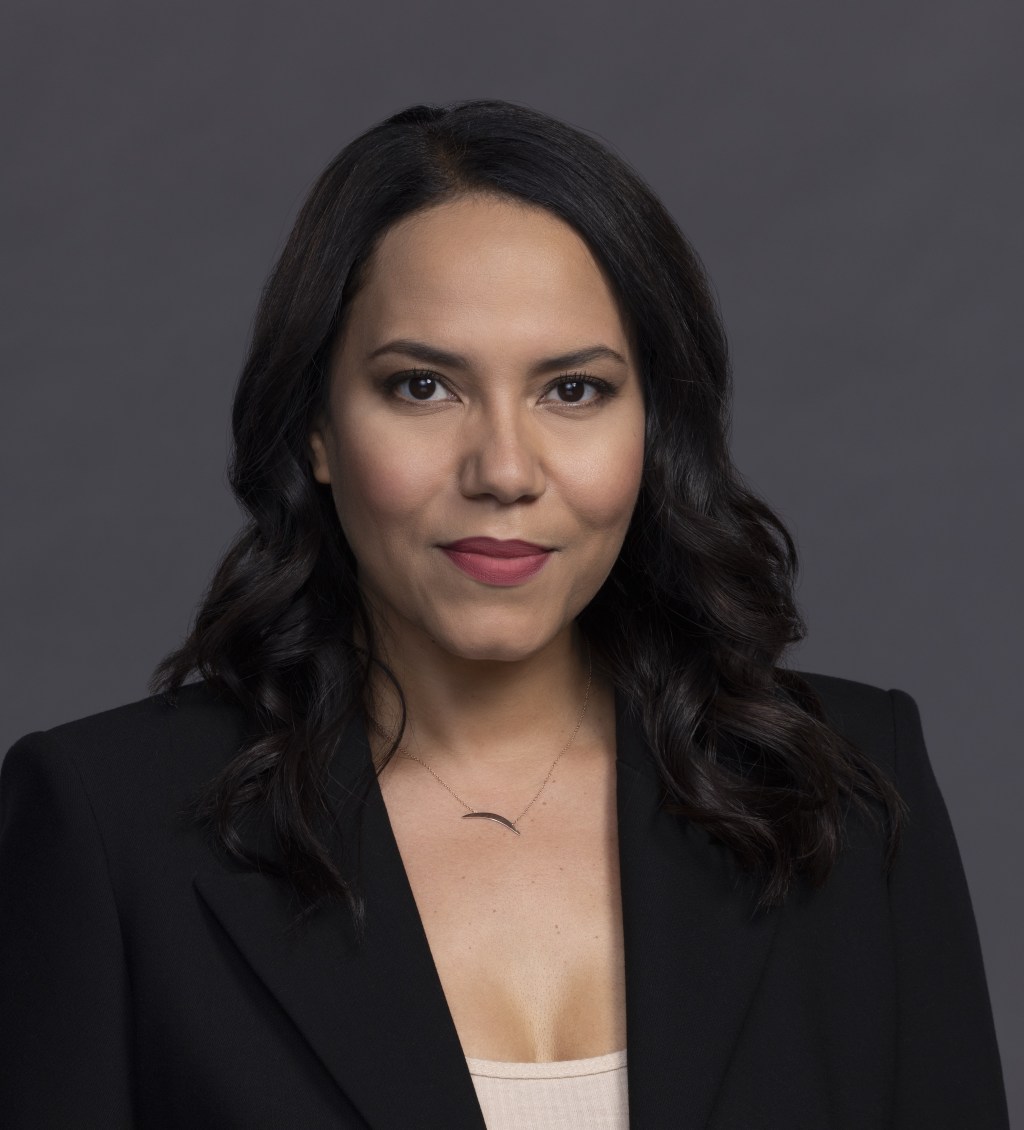
Marissa Jo Cerar. Photo copyright is owned by Hulu/Matt Sayles
 Payton Russell
Leave a comment